
Med spa ads attract the wrong patients when the advertising platform only learns from bookings made inside the ad itself. Most people who see an ad leave to read reviews, ask a friend, or call the front desk before they commit, and none of those bookings are counted. The algorithm learns from what it can measure. Clinics pay for everything it misses.
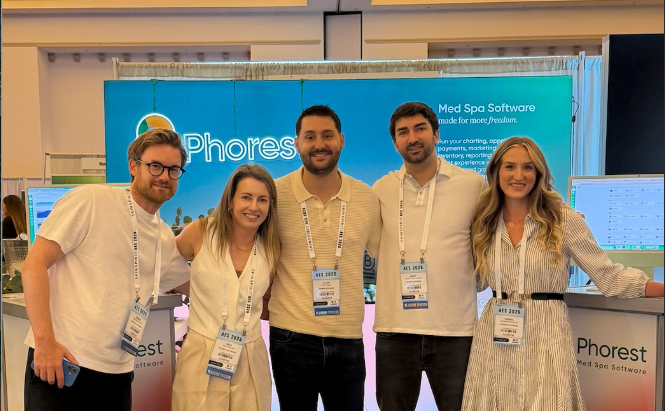
Ronan Perceval, Founder and CEO of Phorest, and Sophia Dickerson, Premium Success Manager at Phorest, made that case in a session called “The Inconvenient Truth About Finding Customers in Medspa” at the Aesthetic Extender Symposium (AES), held August 6-9, 2026, at The Boca Raton Resort in Boca Raton, Florida.
At a glance…
- Around 87% of people who see a medspa ad leave the platform to research independently or call the business before booking.
- Ad platforms optimize toward patients who book instantly inside the ad, a group that excludes most researchers and most repeat spenders.
- Phorest reports both online and offline transactions back to Meta, so ad targeting is trained on completed revenue rather than on clicks.
- Rebooking before the patient leaves the building remains the single most reliable retention step available to a medspa.
- Close to half of consumers prefer not to commit to a date at the desk, which makes a second booking route a revenue decision rather than a convenience.
Why do med spas attract the wrong patients?
Med spas attract the wrong patients because advertising platforms optimize toward people who book instantly inside the ad, and instant bookers are a different group from high-value patients.
A patient weighing up injectables, a laser course, or a treatment plan rarely clicks and books in one motion. They check reviews. They study before-and-after photos. They call to ask a question, or wait a week and come back through a search. Each of those routes ends in a booking the platform cannot see.
The platform reads the silence as failure. Audiences that research get marked down, ad spend moves toward the audiences that click and book on the spot, and the account quietly optimizes itself away from the patients worth the most over a year.
How can a med spa track offline bookings back to its ads?
A medspa closes the gap by connecting its software to the ad platform so that offline conversions are reported alongside online ones.
Phorest integrates directly with Meta and sends both online and offline transaction data back to the platform, including bookings taken by phone and treatments paid for in clinic.
| Where the patient books | What the ad platform sees by default | What changes with offline conversion tracking |
| Clicks the ad, books online | Conversion recorded in full | No change |
| Sees the ad, researches, books online later | Often attributed elsewhere or missed | Booking matched back to the ad that started it |
| Sees the ad, calls, or walks in | Nothing recorded | Transaction reported back to the platform |
A medspa running paid social without offline conversion tracking is training its ad account on the minority of patients who book on impulse, rather than the majority who research first.
What is the most reliable way to increase rebooking at a med spa?
The most reliable way to increase rebooking at a medspa is to secure the next appointment before the patient leaves the building. Rebooking is a staff behavior before it is a software setting. Ronan and Sophia pointed clinic owners toward three steps:
- Set a rebooking target per provider rather than one number for the whole clinic.
- Make the target visible daily using the Phorest Staff Goals feature, not monthly in a report nobody opens.
- Run it as friendly competition, with a leaderboard the team can see.
A rebooking rate that lives in a month-end report changes nothing. A rebooking rate the team can see at lunchtime changes the question providers ask at the end of a treatment.
What should a clinic do when a patient will not rebook at the desk?
A clinic should give that patient a second route to book, because close to half of consumers would rather decide later than commit at the desk.
Two routes came up on stage:
- AI Receptionist: Patients text the clinic and book at whatever hour suits them, including after closing.
- A branded client app: Patients manage their own appointments, memberships, and loyalty rewards in one place, which lifts how often they come back.
The strongest clinics at AES were running both. Staff-led rebooking at the desk holds the patients who are ready to decide, and digital booking catches the ones who need a night to think about it.
What else stood out on the AES 2026 floor?
Three themes repeated across sessions and booth conversions at AES 2026: natural-looking results as the standard, clinical credibility ahead of commercial polish, and decisions made on data rather than instinct.
- Natural results set the brief. Providers described their work in terms of subtlety rather than transformation, which puts a lot of medspa marketing out of step with what patients ask for in the room.
- Medical first, then fun. AES pairs clinical education with business education in one program, so compliance, company structure, and tax strategy sit beside social media and profitability.
- Reporting came up constantly. Providers wanted to see retention, provider performance and lead sources as numbers, and several multi-location practices asked for lead management and consultation forms controlled per location.
Med spa marketing and retention: quick answers
Is the Aesthetic Extender Symposium worth attending for a medspa owner?
How does a medspa know its ads are attracting the wrong patients?
Who should own rebooking in a medspa, the provider or the front desk?
How is Phorest different from other medspa platforms?